
In the first of a short series for Engineers Against Poverty, Simon Stevens, a former senior UK international development official, reflects on who aid should be accountable to and what this means for infrastructure investment.
By Simon Stevens
Accountability in international development pulls in different sometimes contradictory directions: towards people living in poverty and their governments, and towards taxpayers and governments in donor countries. For Engineers Against Poverty (EAP) – which works to improve accountability in infrastructure and engineering – these tensions matter.
In my early years at the UK Department for International Development (DfID), accountability swung towards poor people outside the UK. DFID stopped putting the UK flag on its projects. UK Overseas Development Assistance (ODA) was focussed on low-income countries and we argued that our bilateral footprint elsewhere did not matter as we channelled significant funding through multilateral programmes. General Budget Support (which I led in our programme in Rwanda) was the ultimate expression of a more mixed concept of accountability. ODA supported agreed development plans rather than specific project deliverables. Fiduciary risk assessments provided assurance to UK taxpayers that the risk of funds being misused was being mitigated.

Over time, UK aid accountability swung back towards more directly attributable results for a UK audience: a new UK Aid logo was developed; we spread our bilateral presence across more poor countries; and we spoke with multilateral agencies about how they could give us more credit publicly for our financial contributions.
Arguably, the earlier approach was more efficient, while the switch was more politically astute with sceptical taxpayers.
The creation of the Foreign, Commonwealth and Development Office (FCDO) and the most recent cut of the UK ODA budget to release funding for defence intensified discussion about how international development spending supports the UK national interest.
The tendency towards accountability to funders contributes to a proliferation of agencies with their own logos, administration and reporting mechanisms. Even countries providing relatively small funding expect a seat at the table. In Rwanda, one donor insisted the Minister of Finance contribute valuable time to meet their high-level aid delegation, even though their programme contributed only a small fraction of total aid.
Coordinating all these agencies is time consuming and difficult, especially for low-capacity governments. I once had a conversation with a bilateral agency representative who could not understand why they might have a duty to align their forecasting and reporting with local structures – because their minds were focussed only on accountability at home. Where governments lack the capacity to coordinate these programmes, the more progressive agencies try to coordinate amongst themselves, ideally with the partner government in the room. These structures are often ineffective.
One solution to the coordination problem is for donor countries to reduce their bilateral programmes and operate more multilaterally. Multilateral agencies can coordinate support at the programme design stage rather than at the country level after programmes are designed, and they work at much greater scale. Yet managing the specific demands of each donor is burdensome. It transfers the coordination challenge from partner governments to these organisations to manage. To be most effective, donor countries need to accept less control than they have over bilateral spend and lower visibility to home taxpayers. Many funders find that difficult and therefore earmark their contributions to specific deliverables that can be accounted for.
All these separate accountability requirements, I would argue, take attention and resource away from the ultimate intended beneficiaries: local communities and people in poverty.
In the UK – where reducing poverty is the primary legal objective of official development assistance – I saw no mechanisms through which we held ourselves directly accountable to local communities. Respect for sovereignty requires working with governments and relying on their accountability to those communities.
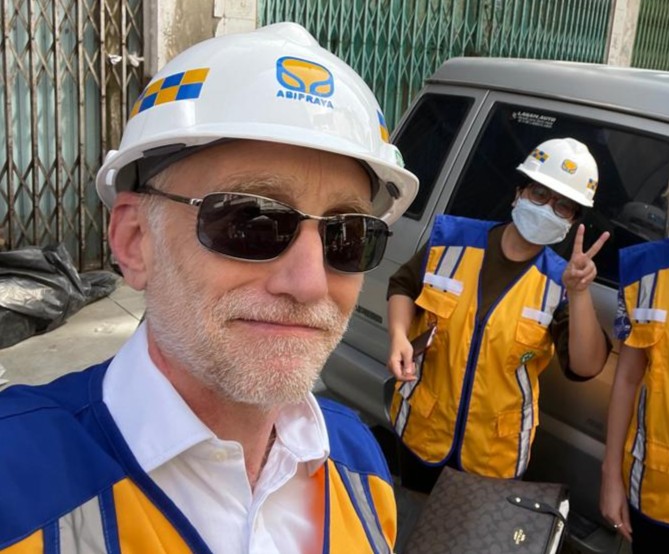
I saw the importance of this accountability with citizens directly in Uganda, where we – as the UK government – were supporting the Uganda National Roads Authority to build a major highway. Only through the Authority’s engagement with the local community along the proposed route did it become clear that residents would need an underpass to cross safely. Without that consultation, this basic need would have been overlooked.
There is no easy answer to the question of where to sit on the accountability spectrum.
I made the mistake once of telling an audience that, under General Budget Support, we could not say precisely where every pound was spent. What I meant was that we could not trace each pound to a precise, tangible product, as you might if buying vaccines or schoolbooks. If we spend all our ODA buying tangible products, we will not help to address the core causes of absolute poverty.
I would also like to have convinced people that the accountability of this sort of spend is an illusion in any case.
Whilst it may free the partner government to use their limited tax revenues on public services of less interest to donors, it may also make combatting poverty harder. For infrastructure particularly, donors should get behind national priorities and associated regulatory reform, participatory planning and meaningful consultation with communities from the design stage.
Aid spent in this way is better for recipient governments and their communities, and a better use of donors’ taxpayers’ money.

Simon has over 30 years’ experience in international development as a policy and programme leader and economist, working across government, think tanks and consulting. From 2000, he worked for the UK government in international aid, firstly at the Department for International Development (DFID) and then the Foreign, Commonwealth & Development Office (FCDO) where he was a strong support of EAP’s work.